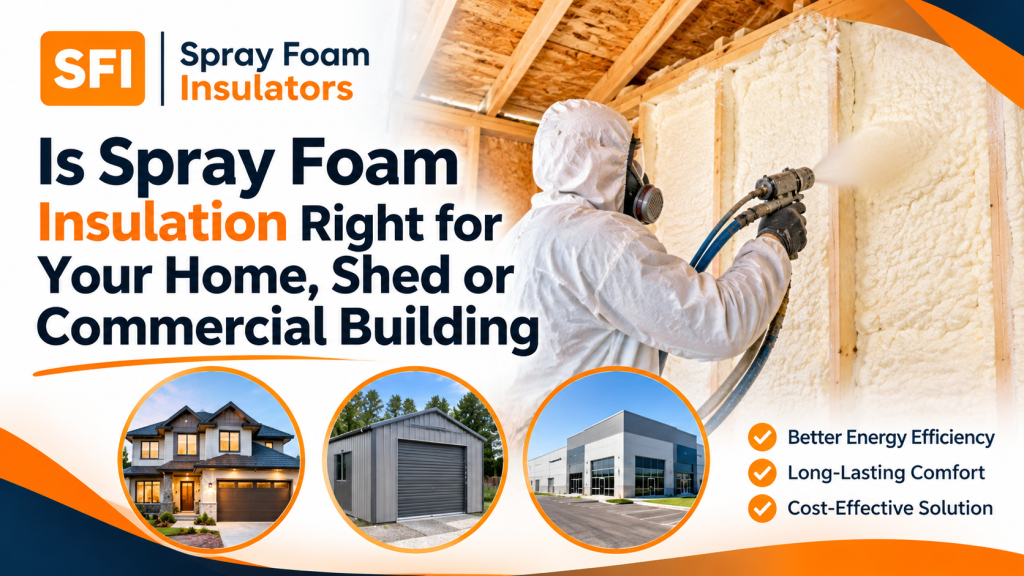

Running a commercial office comes with many responsibilities. From maintaining a comfortable workspace to managing energy use, building owners need to think about supporting their daily operations. Poor insulation can allow unwanted heat to enter or escape, which can make indoor temperature harder to manage. Spray foam insulation commercial buildings is one option businesses can consider when organising or renovating a new facility or upgrading an existing property. It can help reduce heat transfer, seal suitable gaps, and improve the building’s thermal performance when the right product is professionally installed.
Whether you manage a commercial building, warehouse, factory or a workshop, understanding how spray foam works can help you decide if it suits your project.
Table of Contents:
Why Is Spray Foam Insulation Useful for Commercial Buildings?
Commercial buildings often have large roof areas, high ceilings, and complex structures. These features can make temperature control challenging, especially when insulation is limited or no longer performs as expected. Spray foam is applied as a liquid that expands and hardens to form an insulating layer.
On the basis of the use of your commercial space, the product and application can help your business in these ways:
- Manage indoor temperatures- Insulation slows heat transfer through suitable roof and wall surfaces.
- Reduce unwanted air movement- Foam can seal appropriate gaps and openings.
- Address condensation risks- A correctly designed insulation system can help manage moisture and condensation.
- Insulate complex surfaces– Spray application can reach certain irregular shapes and difficult areas.
- Upgrade existing facilities– Some insulation projects can be completed without removing the entire roof, depending on the building and installation method.
For example, a warehouse with a metal roof may become very hot during summer. Insulating the underside of the roof could help reduce heat transfer into the building and support the existing cooling system. The actual results depend on the design of the building, its ventilation, existing insulation, and the product selected.
Which Commercial Buildings Can Benefit?
Spray foam insulation has several applications across commercial and industrial properties. The right solution depends on the building’s purpose and operating conditions.
1. Warehouses and Storage Facilities
Warehouses often cover large areas, making roof insulation an important consideration. Better thermal control may help create a more stable working environment for employees and support certain storage requirements. For instance, a distribution business may want to improve conditions for workers who spend long hours inside a large warehouse. A site assessment can help identify whether roof or wall insulation is suitable.
2. Factories and Workshops
Factories may have machinery. Production areas and equipment that generate heat. Insulation can form part of a wider plan to manage heat transfer and reduce unwanted draughts. Therefore, before choosing a product, businesses should consider the building’s construction, operating temperatures and any special safety requirements.
3. Commercial Kitchens and Specialist Facilities
Some commercial facilities have specific temperature and moisture requirements. Insulation may help manage heat transfer around suitable building surfaces, but the system must be selected according to hygiene, ventilation, and other operational needs.
4. Tanks and Industrial Structures
Certain spray foam systems are also used for tanks and vessel insulation. These applications require careful product selection based on surface materials, operating temperatures, and site conditions.
Spray Foam Insulation Services for your Next Project Across Australia
Every commercial building has different insulation needs. A warehouse may need better temperature control, while a factory may require insulation around its roof, walls, or industrial structures. Spray foam insulators provide commercial and industrial services to support projects across Australia.
For businesses seeking Spray Foam Insulation Commercial Buildings Sydney, a professional assessment can help identify suitable insulation options for warehouses, factories and other commercial facilities. The building’s roof condition, surface materials and access requirements should be considered before installation.
Similarly, Spray Foam Insulation Commercial Buildings Brisbane projects may require careful planning to address heat transfer and moisture concerns. Choosing the right foam system depends on the building’s design, ventilation and intended use. Discussing these factors with an experienced contractor can help you plan the work effectively.
Businesses exploring Spray Foam Insulation Commercial Buildings Melbourne can also consider insulation for new construction, existing facilities and refurbishment projects. Whether the work involves roof insulation, wall applications or specialist industrial needs.
Additionally, businesses should also ask about relevant building requirements, fire safety provisions and product specifications. Spray foam is not a one-size-fits-all solution, so the selected system must suit the particular structure.
How to Choose the Right Spray Foam Insulation Provider?
Before starting a commercial insulation project, look beyond the initial price. The quality of the assessment, product selection, and installation process also matters. Thus, ask the provider about:
- Experience with commercial and industrial buildings
- The type of foam recommended and why it suits the project
- Surface preparation and installation requirements
- Safety measures and any temporary access restrictions
- The expected scope of work and quotation details.
A clear discussion at the beginning can help prevent misunderstandings and make project planning easier.
Conclusion
From warehouses and factories to workshops and specialist industrial structures, suitable insulation can support better temperature control and building performance. Through Spray Foam Insulation Commercial Buildings, you can make your commercial and industrial places comfortable, well maintained, and liveable for people who spend most of their working within that premise. A thorough site assessment can help determine which approach may suit your building.
Spray Foam Insulators works on commercial and industrial insulation projects including roof, wall and specialist applications. If you are considering an upgrade, gather your project details and discuss your requirements with the team.
FAQs
Is spray foam insulation good for sheds?
Yes, it can be a good option for many sheds. Closed-cell spray foam sticks to suitable surfaces, fills gaps and adds thermal resistance, which helps reduce heat entering in summer and escaping in winter. The right choice still depends on the shed’s construction, condition and use.
Can spray foam insulation stop condensation in a metal shed?
It can help reduce condensation by limiting air leakage and temperature differences on the metal surface. However, it is not a fix for every moisture problem. Roof leaks, poor drainage and existing rust should be repaired before installation.
How much does Shed Spray Foam Insulation cost in Australia?
The cost depends on the roof and wall area, the type and thickness of foam, the condition of the surfaces, access and any preparation or repairs. The best way to get an accurate price is to request a quote for your specific shed.
Is spray foam insulation safe to install in a shed?
It is generally installed by trained professionals who follow the manufacturer’s instructions. Occupants should stay out of the shed until the installer confirms it is safe to return. Ask about ventilation, curing time and product documentation before work starts.
Do I need to prepare my shed before installing spray foam?
Yes. Check the roof and walls for leaks, rust and loose panels, and find out why moisture is appearing. Also plan wiring and any areas that may need future access. A professional site assessment can confirm what is needed.